


Now that the 2025 season is all wrapped up, we want to update you on the wording that has collectively been agreed too across the sport to refer to the key features of the new regulations.
Formula 1 has unveiled the full scope of its 2026 regulations package, confirming a dramatic transformation in both chassis design and power-unit technology that will redefine how the cars look, feel and race. The new rule set, described as the most comprehensive overhaul in F1 history, aims to deliver more competitive racing, improved sustainability and greater emphasis on driver skill.
The changes, set to debut in 2026, touch every major component of the modern F1 car, from its dimensions and aerodynamic philosophy to its hybrid power deployment and the terminology fans will hear during broadcasts.
A Smaller, Lighter, More Agile Car
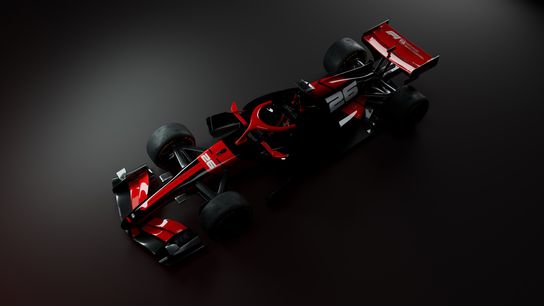
One of the biggest visual shifts will come from the new chassis regulations, which shrink the footprint of the current generation of F1 machines. Wheelbase will be reduced by 200mm to 3400mm, overall width drops by 100mm to 1900mm, and the floor narrows by 150mm. Minimum weight also falls by 30kg, bringing the target down to 770kg.
The goal is simple: more responsive cars that allow drivers to race more closely, with a noticeable reduction in the bulk and stiffness associated with the current ground-effect era.
The 2026 cars will also produce significantly less downforce, estimated at a reduction of 15–30 percent, due largely to the removal of the deep ground-effect tunnels that dominate today’s designs. At the same time, aerodynamic drag will fall dramatically, by as much as 40 percent, improving efficiency and enabling different approaches to straight-line performance.
Tires will retain the 18-inch wheel size introduced in 2022, but both the front and rear compounds will narrow (by 25mm and 30mm respectively) to help reduce drag, improve weight distribution and enhance mechanical balance.

Active Aerodynamics Replace DRS
One of the biggest competitive changes arrives with the introduction of fully active aerodynamics. Instead of the Drag Reduction System (DRS), used since 2011, drivers will now work with movable front and rear wings that automatically and strategically shift between “cornering” and “straight-line” modes.
This system, known collectively as Active Aero, is designed to give drivers greater control, improve race-ability, and reduce the reliance on single-file slipstreaming. It also integrates seamlessly with the new hybrid deployment rules, allowing a more nuanced aerodynamic-and-power approach to overtaking.
A Radical New Hybrid Philosophy
Power units in 2026 will move to a nearly even split between internal combustion power and electrical power. Roughly 50 percent of the output will come from each system—an unprecedented balance in F1 engine design.
The MGU-H, the complex heat-energy recovery component, is being removed entirely. In its place, the MGU-K will grow dramatically in capability, from the current 120 kW to a massive 350 kW. That increase will fundamentally change how drivers attack and defend, with far more electrical power available for overtakes and acceleration.
Cars will also run on 100-percent sustainable fuel, developed to match F1’s commitment to reduced carbon emissions without sacrificing performance.
Drivers Take Center Stage With New Tactical Controls
With more available electric power and a more central role in energy management, drivers will have more strategic control than ever before. F1 says the new rules are designed to showcase driver skill—not just aerodynamic efficiency.
Energy deployment, regeneration cycles, and battery conservation will now play a major part in race strategy, with drivers making split-second decisions about when and how to unleash—or store—hybrid power.
To help fans and broadcasters understand this new layer of racing, Formula 1 has introduced updated terminology and clearer explanations to describe the major tactical elements.
New Fan-Facing Terminology for 2026
The following terms will become part of the sport’s official vocabulary starting in 2026:
Overtake Mode - A system that replaces DRS. Drivers within one second of a car ahead may deploy additional electrical power to attempt a pass. It is a strategic tool that can be used in bursts or spread across a lap.
Boost Mode - A driver-controlled power-deployment button that delivers maximum power from both the engine and battery, regardless of track position. Can be used offensively or defensively.
Active Aero - Electronically controlled front and rear wing adjustments that alter downforce depending on whether the car is in a cornering zone or straight-line zone, improving grip and optimizing power usage.
Recharge - The process through which drivers replenish the battery using regenerative braking, throttle lift-off at the end of straights, or partial-power phases in corners.
Why These Terms Were Developed
Formula 1 says the vocabulary overhaul was created jointly with the FIA, team engineers and third-party research groups. The terminology was tested with both longtime and new fans, including through F1’s “Fan Voice” panel of more than 50,000 participants.
The goal was clarity, avoiding gimmicks while explaining the new technical landscape in a simple, accurate way that enhances commentary and fan understanding.
A New Era Begins in 2026
When the regulations arrive, Formula 1 will enter a dramatically different chapter, one defined by lighter cars, bigger hybrid systems, more overtaking tools, and an expanded role for driver intelligence.
The combination of reduced downforce, increased electrical power, sustainable fuel and active aerodynamics marks the most ambitious redesign in the sport’s 75-year history. According to F1 and the FIA, the intent is not only closer competition but also a more compelling product for fans around the world.